
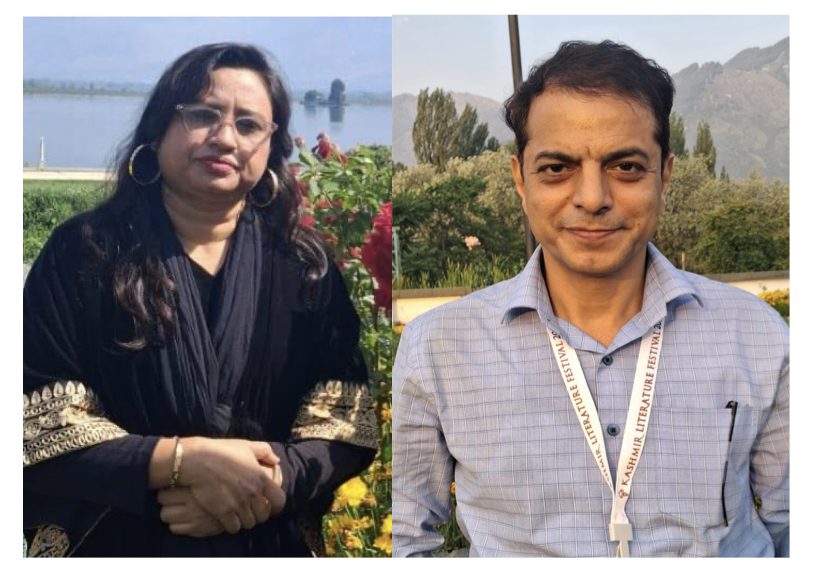

By Dr. Shamenaz & Gowher Pirzada
The land of Kashmir and Uzbekistan are both rich in beauty and culture. Though Kashmir and Uzbekistan belong to different parts of the world and though they are geographically different from each other yet there are many similarities in terms of culture and history which is due to historical connections, especially during the famous Silk road era and the Islamic golden age.
When it comes to poetry we see that Uzbek poetry and music has influenced Kashmiri Sufi poetry to an extent because of Persian influence. The Eastern Maqam which is called as Shashmaqam in Uzbek language has deeply influenced the Sufiana Mausiqi of Kashmir and almost all the poets are influenced by the music and Sufi tradition of Central Asia.
The classical regional music tradition of Kashmir is very distinct possessing rich folk as well modern music making it unique. The Kashmiri classical music which in their native language is called Sufiana Mausiqi or Sufiana Kalaam is highly influenced by Eastern Maqomat particularly from Persia and Central Asia. It is a type of choral ensemble music whose foundation is the principal melodic concept of Maqam, plural Maqamat and particularly in Uzbekistan it is called as Maqomat.
The credit goes to the King of Kashmir, Sultan Zain-ul-Abidin who was a lover of music. In the 15th century, he invited musicians from different parts of Persia, Uzbekistan and India who enriched the music tradition of Kashmir by blending their music with the Kashmiri music.
Sufiyana mausiqi of Kashmir is the result of many mystics and seers belonging to different places. We can say that the modern Kashmiri Sufiyana mausiqi is the synthesis of music of India, Persia and Uzbekistan (Bukhara and Samarkand) and local Kashmiri music. This unique synthesis makes Kashmiri music very rich resulting in its global popularity. Some of the prominent mystics, seers and poets of Kashmir who have been influenced by Eastern Maqomat are; Sheikh-ul-Aalam (Nund Rishi), Lal Ded, Samas Faqir, Wahab Khaar, Soch Kral, Rasul Mir, Samad Mir to name a few are more or less influenced by the Central Asian tradition of Sufi Poetry.
Noor-ud-din or Nund Rishi is founder of Rishi order, a Sufi tradition of Kashmir. Popularly known as Sheikh-ul-Aalam or Alamdar-e-Kashmir, he was a Kashmiri Sufi saint, mystic, poet and Islamic preacher. Many Kashmiri spiritual teachers and saints like Hamza Makhddom, Resh Mir Saeb and Shamas Faqir were influenced by his mysticism.
He was the first Kashmiri mystic who was influenced by the Persian/Central Asian Sufi tradition of music and literature known as Eastern maqam. He was highly inspired by the legacy of Master like Shah-e-Hamdan and integrated the Persian Sufi accentuation of inward, ascetic and mystical love. This shaped the mystical ideology of Sheikh Noor-ud-Din Wali who is famous for blending the local Kashmiri cultural, linguistic and Shaivite elements resulting in building an indigenous Sufi order in Kashmir which forms the foundation of Kashmiriyat. He was greatly influenced by Sufi tradition, especially Kubrawaiya order which was the base of his spiritual framework.
Nund Rishi was inspired by the Eastern maqam/musical spirituality which synthesizes poetry with spiritual ecstasy often linked with the emotional and mystical experience of an individual. His verses in the local terms are called as Shruks are steeped in devotion and critiques of materialism, exhibiting a profound association with the Oriental tradition of mysticism like those of Persian Sufi philosophical Masters like Mansur al-Hallaj and others mystics.
Another Kashmiri Sufi mystic influenced by the Easter maqam is Lal Ded who is a household name in Kashmiri’s spiritual and poetic circle. In Kashmiri tradition, she is equally respected by both Hindus and Muslims, while Hindus call her as “Lalleshvari” in Muslim, she is referred as “Lal Arifa”. In the literary circle, she is famous as “Lal Ded”. In the oral tradition, she is also popular with the name, “Lalla”.
In her native language her poems are called “vakhs” which are believed to be pioneers of Kashmir literature. When Lal Ded wrote at that time, Kashmiri language was developing as a modern language. Since the fourteenth century, a total of 258 vakhs by Lal Ded have been popular in the forms of songs, proverbs and prayers in the popular culture of Kashmir. The prominent quality of her vakhs is that they possess a common theme present in them and some of the vakhs are even in the form of questions and answers. These vakhs incite readers to think about it and respond towards it. One of the qualities of these vakhs is its simplicity and lucidity at the same time they have deep meaning, are subjective and almost inexpressible which makes the readers and listeners understand them easily irrespective of any intellectual ground.
Lal Ded is considered as yogini and so we find her verses exhibiting her ascetic experience owing to the mystical practice of Kashmir Shaivism. The most important aspect is that this spiritual school is this mystical school of thought that is a confluence of many philosophical traditions, hence in her poems we find examples of images and ideas of those spiritual traditions i.e., Tantra, Yoga, Yogacara , even the practices of Sufism.
Another Kashmiri female mystic who was influenced by Easter maqam music and literary tradition of Persia and Central Asia is Habba Khatoon (1554 -1609) who lived in the 16th century. She is called the “Nightingale of Kashmir” because of her poetic and singing quality. She was a poet and Queen consort of Yusuf Shah Chak, the last independent ruler of Kashmir. Hearing her melodious voice, he fell in love with her and later married her. When Mughal emperor Akbar imprisoned him, she became an ascetic. In memory of her husband, she started wandering and singing sorrowful songs of longing.
These songs and verses became so popular that now they are part Kashmiri folk music and known to every household in Kashmir. Many people consider Habba Khatoon as synonymous to kashmiri culture.
Habba Khatoon was highly impressed by the Eastern maqam, the music and literature tradition of Persia and Central Asia. Credit goes to her, bridging the gap between folk music and classical Sufi music tradition of Kashmir. She introduced the musical mode in Kashmir known as Rast-Kashmiri. She has been able to achieve this musical mode by making structural changes to the conventional Persian mode called Maqam Rast-Farsi. She is also credited with pioneering the short deeply emotional lyric form called lol, which is based on separation or longing for beloved. This form is a fine example of integrating the maqam with simple Kashmiri language which is the reason why her songs and verses have been passed down orally from generations. They are very similar to folk songs of Kashmir. Her famous Kashmiri poem, Rah Bakshtam (The Plea of Separation) is a fine example of this form.
In Habba Khatoon verses, we find metaphorical images as her poetry often contains themes of personal longing, despair, mystical yearning and intense passion which is very similar to the mystical poetic tradition of Oriental world particularly Persia and Central Asia. The influence of Easter maqam is not confined to the poets of the middle ages of 15th and 16th century but also poets of the 19th and 20th century as well. Some significant names are Samas Faqir and Rasul Mir.
Samas Faqir’s (1839- 1916) real name was Muhammad Sidiq Bhat but he was famous as Shamas Faqir. A well known Sufi poet of the nineteenth century, he was also influenced by the Sufi tradition of Persia/Central Asia. or Maqam which shaped his mysticism. This is quite reflective in his writings which is a perfect blend of Sufi music (Sama') and devotional practices in South Asia and the Middle East/Central Asia. He was inspired by many great masters of his times, whose works he has absorbed and accumulated in his verses which reflects his mystical experiences. He is very popular in Kashmiri literary circles as well as in the households because of his artistic excellence and musicality. His poetry possesses mystical quality which paves way for very insightful ideas compelling the readers to see the distinct quality of Kashmiri language and literature.
The next poet in the series is Rasul Mir who belonged to the 19th century. He is often compared with British romantic poet, John Keats who also lived in the same era. Rasul Mir was highly influenced by the Eastern maqam like his predecessor, Nund Rishi and Lal Ded. Being a Sufi mystic poet he was influenced by the Persian/Central Asian tradition of music and poetry and integrated them with Kashmiri linguistic nuances making a fine piece of creative work. He revolutionized the Kashmiri ghazals and this is one of the reasons that they are still sung by the Kashmiri singers and musicians. As a Sufi mystic poet belonging to a composite musical tradition or Kashmiri Sufiyana Mausiqi we find the musical and lyrical sensibilities of the Persian/Central Asian Maqam systems in his verses.
He was influenced by the great Sufi masters like Muhammad, Hafez, Saad Shirazi, bedil, Fairdausi, Shah-e-Hamadan, Rumi, Nizami, Attar and Ghani Kashmiri which is quite reflective in his works as we find the themes of pure and intense love and longing which is similar to the emotional landscape present at the centre of the Maqam-influenced lyrics. In his poetry, we find an intense lyrical quality and musical elements which makes it very melodious. In his verses, he has also utilized words, rhythm and internal rhyme with extraordinary skill which is very close to the structured mode of Maqam.
The most prominent feature of his writing is that he integrated the Persian ghazal forms based on Eastern maqam with the traditional Kashmiri vatsun form. We find in his verses a rich sensual imagery which is the reason he is compared with John Keats and which is also the hallmark of the Persian-Arabic poetic tradition which synthesizes with the regional Kashmiri idioms. It is Rasul Mir who is credited with abridging the gap between the two poetry traditions; the classical Persian and the local Kashmiri language making Kashmiri ghazal a modern or avant garde approach quite distinct from other regional poetic traditions.
In the end, we would like to say that Eastern maqam is the base of Kashmiri Sufiyana kalaam including music and poetry. This melodious music tradition of Persia and Central Asia has been transmitted to Kashmir since the 15th century through the Silk route which has been patronized by rulers like Zain-ul-Abidin and Habba Khatoon and still present in Kashmiri music and poetry. This music and literary tradition has influenced the Kashmiri Sufiyana kalaam and mystic poets like Nund Rishi, Lal Ded, Habba Khatoon, Samas Faqir and Rasul Mir etc. The fact is that this inspiration is still present in the contemporary Sufiyana Kalaam as well making it unique and popular.

Comments are closed.