
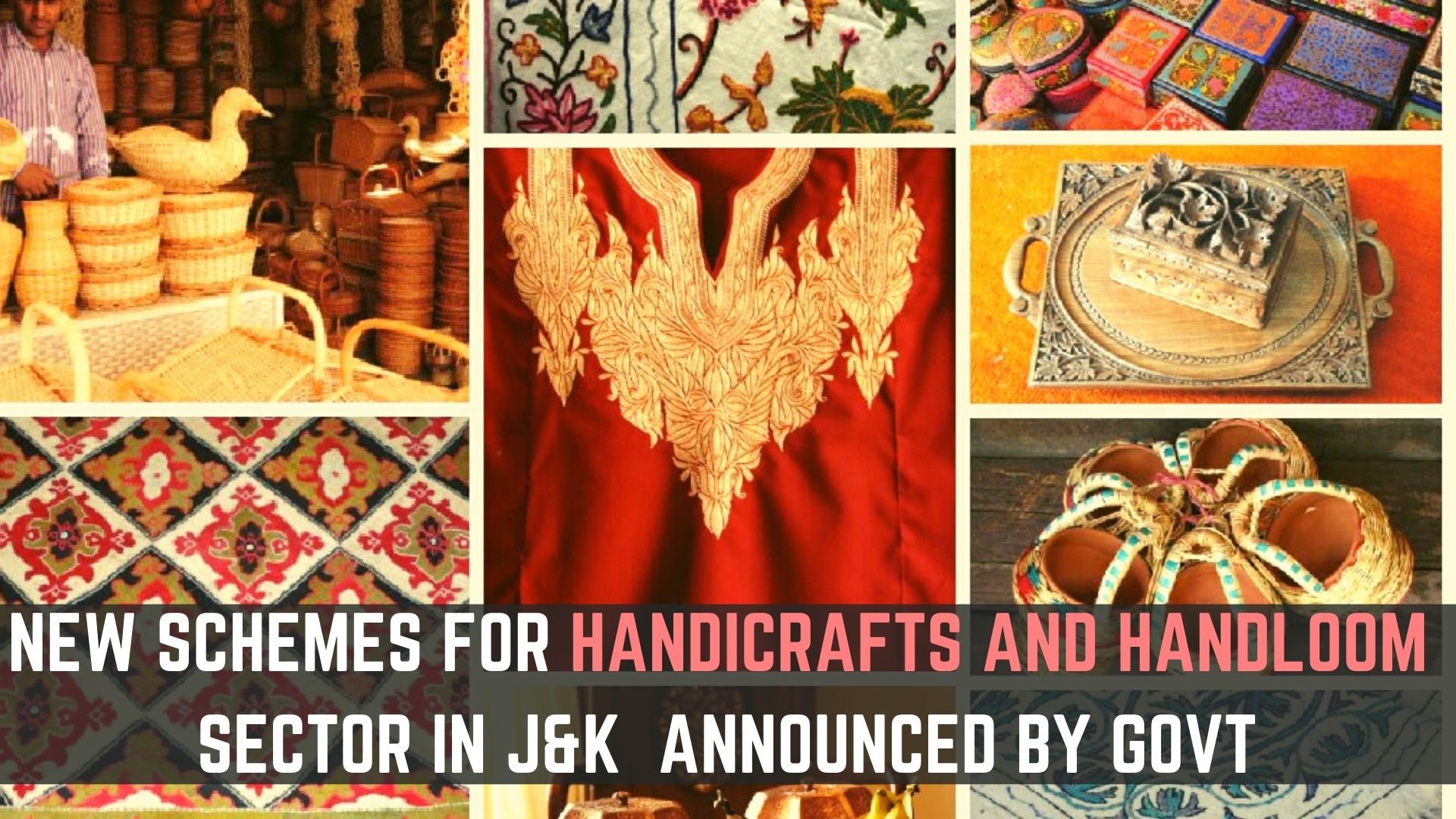

In response to growing concerns over the misrepresentation of machine-made goods as handmade Kashmiri crafts, a large meeting of showroom owners, shopkeepers, craft dealers, and other stakeholders from across the Valley was convened on Monday along Srinagar’s Boulevard Road.
The meeting, held on July 29, followed a general notice issued by the Department of Handicrafts and Handloom on July 25, warning traders against the sale of unlabelled or misbranded products.
Participants unanimously expressed deep concern over the growing threat posed by the sale of machine-made products under the guise of traditional handicrafts. To address the issue, several inspection squads have been formed across market zones to verify labelling practices in showrooms, shops, and hotel outlets. In cases of violation, the squads will report directly to the department for necessary action against erring traders.
“There must be zero tolerance for those few who damage the reputation of our entire industry,” one participant said.
The attendees emphasized the need to protect the integrity of Kashmiri handicrafts and acknowledged the artisans as the backbone of the trade. They also extended their gratitude to the Directorate of Handicrafts and Handloom, particularly Director Mussarat Zia and Deputy Director Mirza Shahid Ali, for initiating stricter measures against misbranding.
The meeting also addressed the worrying decline in artisan participation, noting that the relationship between artisans and traders is interdependent. Many attendees proposed that the Department of Handicrafts and Handloom, along with trade bodies like the Kashmir Chamber of Commerce and Industry (KCCI), should work jointly to create an environment that encourages artisans to return to their craft.
A collective resolution was passed to take strict action against any trader involved in misrepresentation. The message was clear: safeguarding the future of Kashmiri artisans and ensuring transparency in trade practices is a shared responsibility between the government and vendors.
In light of recent media reports, traders also sought to clarify public concerns. “As long-standing promoters of genuine Kashmiri handicrafts registered with the Department, we take pride in selling handmade items,” said one shop owner. “But due to the limited supply and time-consuming nature of handmade production, some machine-made goods are also stocked and are clearly labelled.”
Traders stressed that ethical business practices, including clear labelling and customer transparency, have long been followed. However, recent media coverage, they said, had unfairly painted all showroom owners with the same brush.
“Just as one wrongdoer does not represent an entire community, one violator should not tarnish the image of an entire trade,” said another attendee.
Participants also recalled a similar crackdown in 2004, when the then Deputy Chief Minister Mangat Ram Sharma, following consultations with trade associations, had advised sellers to clearly label all products to avoid unfair trade practices. Since then, they said, separate labelling of handmade and machine-made products has been widely implemented, with few complaints of malpractice.
More recently, in July 2024, the Directorate held multiple meetings with showroom owners urging continued compliance with labelling norms — a directive that traders say they are already following.
Given this context, the trade community has appealed to the Department of Handicrafts and Handloom, and the Commissioner Secretary, Industries and Commerce, Jammu and Kashmir, to allow more time for collaborative efforts to address the issue.
“We are committed to upholding the authenticity of Kashmiri handicrafts,” a group statement concluded, “but we request fair oversight and recognition of those who have followed the rules in good faith.”

Comments are closed.