

Zubair Qureshi
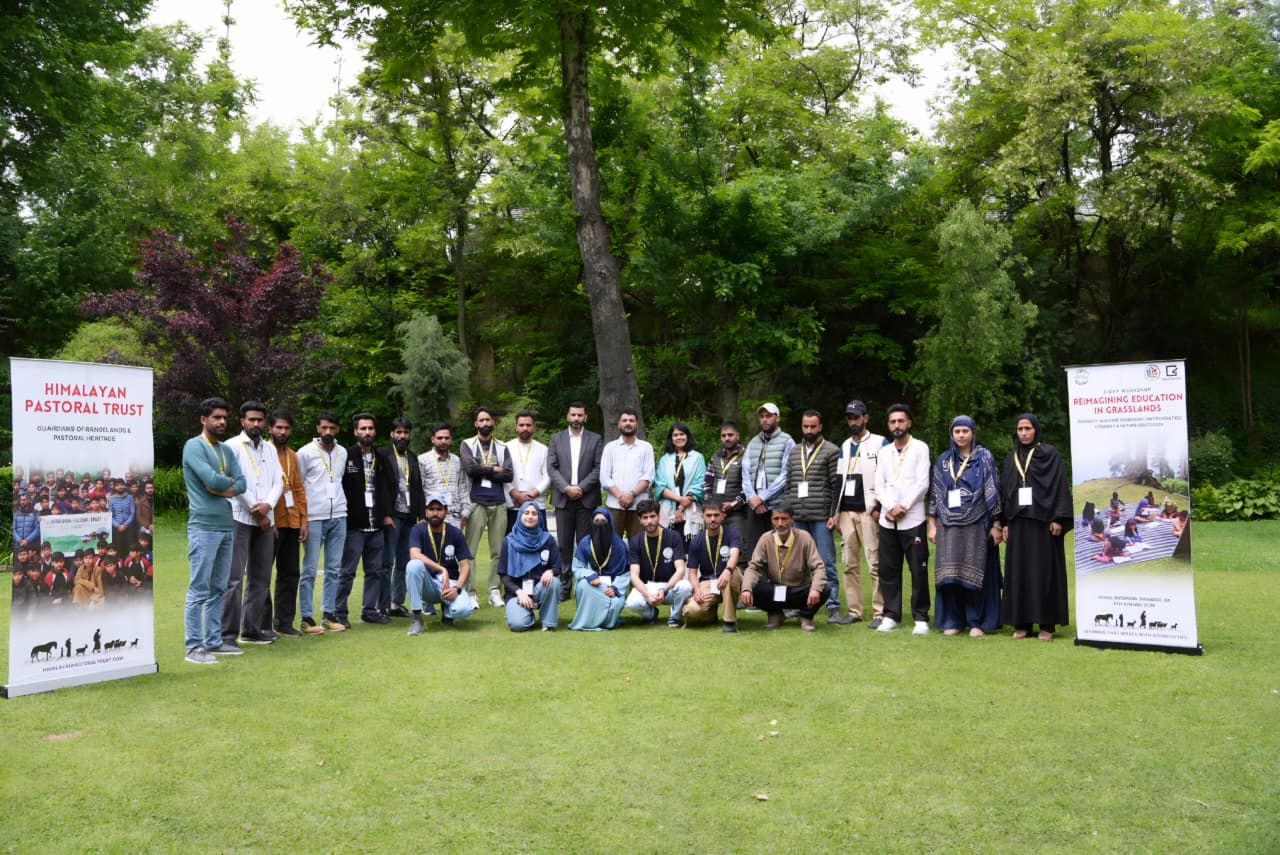
In a pioneering effort to strengthen educational access and quality for children of nomadic pastoral communities, Himalayan Pastoral Trust, a Kashmir-based non-profit organisation, successfully conducted a two-day residential workshop from 4-5 May for the Seasonal Mobile School Teachers in collaboration with Nature Classrooms, a Bengaluru-based NGO working toward integrating environmental literacy with the everyday learning of students.
Organised under HPT’s flagship Grasslands to Classrooms initiative, the workshop aimed to equip teachers with innovative, low-cost, and context-sensitive teaching methods that are better suited to the realities of mobile schooling in remote alpine pastures. It brought together seasonal teachers currently engaged with the Seasonal Mobile Schools established in the upper reaches of Jammu and Kashmir under the Samagra Shiksha initiative, a centrally sponsored programme committed to ensuring inclusive, equitable, and quality education for all children, particularly those from geographically isolated and socially marginalised communities.
The Coordinator Samagra Shiksha Kashmir, Asif Mehraj Shah, graced the event and appreciated the initiative while stressing the need for nature-based, innovative, and context-sensitive educational practices for children living in migratory and geographically remote regions.
A total of twenty-five teachers associated with the Samagra Shiksha Seasonal Centres from different districts of Jammu and Kashmir actively participated in the workshop.
These teachers, who spend several months each year teaching children of nomadic families in high-altitude grasslands and alpine meadows, brought with them a wealth of first-hand classroom experiences shaped by unique geographical, climatic, and social challenges.
The workshop created a rare opportunity for them to come together on a common platform to share their day-to-day realities, discuss the constraints of running classrooms in temporary migratory settlements, and reflect upon the learning levels, attendance patterns, and behavioural responses of children studying in these seasonal settings. Speaking on the occasion, the initiative coordinator, Arif Hussain, emphasized that education in migratory grasslands cannot be confined to blackboards and textbooks alone. “Children in pastoral landscapes live amidst a vibrant natural classroom.
The aim is to help teachers recognise that nature itself can become a powerful source of literacy, curiosity and critical thinking,” he said. Participants described the workshop as highly enriching and relevant, saying that the practical strategies can provide easy and affordable avenues to make seasonal schooling more engaging despite difficult terrain, short academic windows, and multi-grade classroom settings.
The workshop concluded with a shared commitment from organisers, teachers, and government representatives to work together for improving foundational learning among nomadic children and making Seasonal Mobile Schools more joyful, meaningful, and connected to community life.

Comments are closed.